
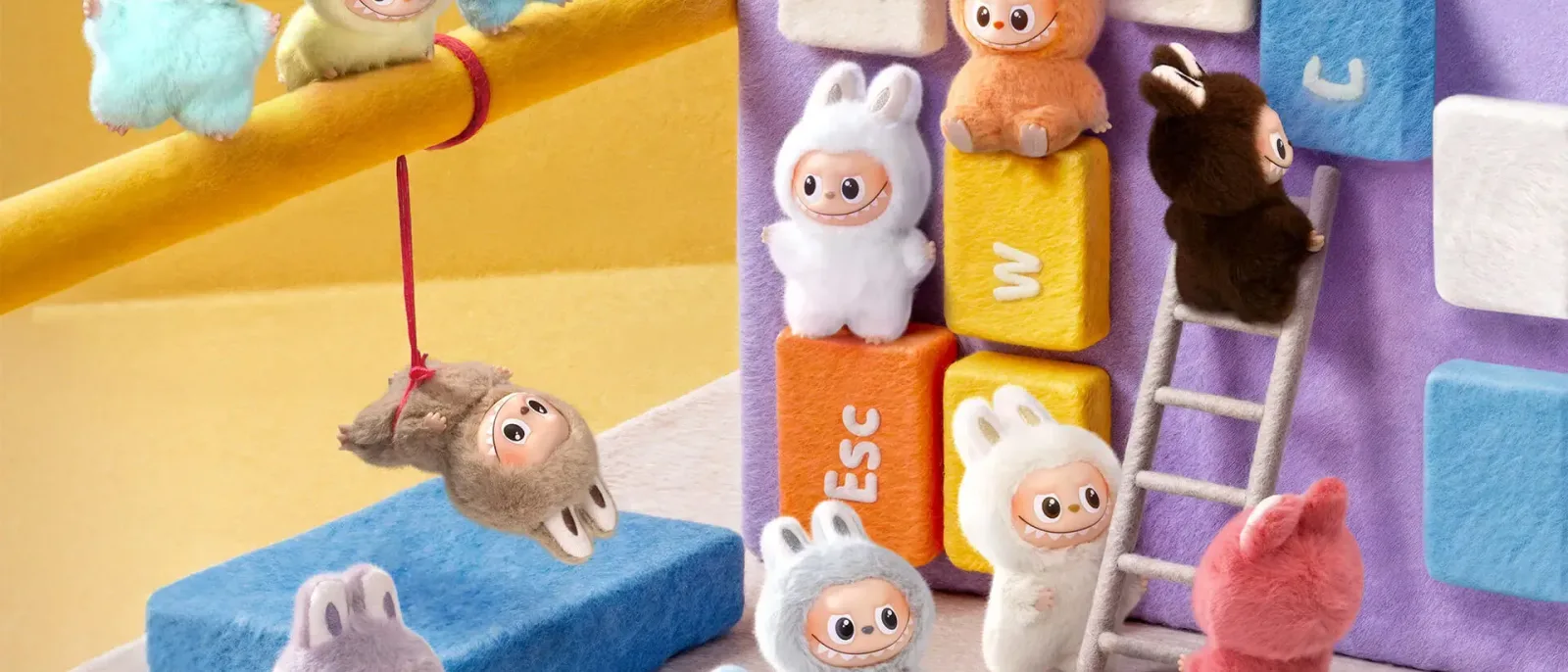
Walk into a Gentle Monster store in Seoul, or just watch someone unbox a Labubu on social media, and you’ll see the same thing: people paying to feel something, not just to take a product home.
That idea comes from an article published in Meio & Mensagem (in Portuguese) by Franklin Costa, co-founder of øclb, on how Asia became the world’s reference point for experiential retail. The numbers he cites help explain the scale of the phenomenon: 76% of Brazilians say they’re interested in South Korean culture, 29% buy Korean-related products every month, Chinese brands already make up 21% of Brazil’s home appliance market, and TikTok has 91 million users in Brazil alone.
What Asia figured out that the rest of the world is still learning
China and South Korea took different paths. China scaled consumption: Popmart, the company behind the Labubu collectible dolls, now runs more than 670 stores and 2,800 robo-shops worldwide. Its theme park, Pop Land, grew visitor numbers by 70% year over year.
South Korea, on the other hand, bet on creating desire. Gentle Monster, an eyewear brand, opened Haus Nowhere Seoul: a 14-story building with mechanized robots, giant sculptures, and displays built to become content. The result is that the store turned into a tourist attraction, not because the glasses are pretty, but because every floor is a scene someone wants to capture.
Buying stopped being enough. People want something to show for it
The real point behind both cases isn’t scale or budget, it’s the same strategic decision: turning a purchase into a shareable event. A display window, a box, a store aisle became a video script before it became a sale.
This isn’t exclusive to luxury brands or Asian giants. It’s a behavior shift that has already landed everywhere: people decide to buy partly based on what they’ll post afterward.
You don’t need 14 floors to apply this
The temptation, looking at these cases, is to assume it only works at massive scale. It doesn’t. The principle behind Gentle Monster and Popmart is replicable at any business size:
- ✦An unboxing or delivery moment designed to look good enough for someone to film, even if it’s a clinic mailing test results or a local online store packing an order.
- ✦A physical corner of the store, the office, or even the website built specifically to be photographed, not just to function.
- ✦A visual identity consistent enough to be recognized in three seconds of video, without needing a big logo in the corner of the screen.
The risk of copying without understanding
The most common mistake is copying the aesthetic without understanding the strategy behind it. A decorative robot or an "Instagrammable" display copied without purpose just becomes expensive decoration, the same way pretty design without strategy becomes decoration instead of selling anything.
The question Gentle Monster and Popmart answered before designing a single display was: what do we want someone to feel, and what will they want to show someone else afterward? Design that gets shared starts with that question, not with the visual execution.
If your brand still thinks of experience as just "a nice-looking store," it’s worth rethinking: what in your business already deserves to become a scene someone wants to capture? Talk to me on WhatsApp and let’s think it through together.

Graphic designer. I write about brand, form, and craft, what holds an identity together on any surface.